ENG
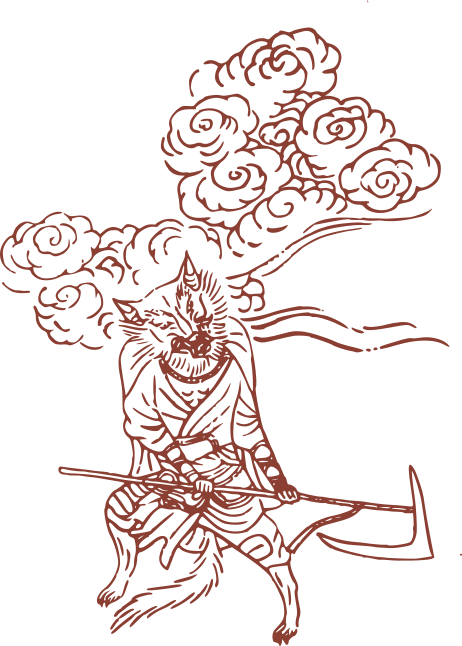
Fangs bared, eyes like twin lanterns bright,
In battle's clash, he finds delight.
Agile and brave, with skills so fine,
Yet lost and wandering, his fate's decline.
The raging flames had reached the Golden Hall, and the sounds of battle outside were deafening, though they were muffled within.
The king, gravely wounded, sat amidst the wreckage, holding a recently deceased young boy in his arms.
A figure stood behind the curtain, sighing, "Such devastation... Don't you see? It's all because of you."
The king remained silent.
"Whether the Yaksha royal lineage continues or ends depends entirely on your decision today."
The king couldn't help but glance around the Golden Hall, still able to see traces of its former glory.
"They say Yakshas are the most resolute, yet you, as their king, are hesitant and indecisive."
The king gently stroked his son's face, the body still warm. He wished so dearly that the boy could see his vast and beautiful homeland he had never been to.
"If you have even a shred of linger desire, why not try my method? The unattainable wish in your heart, I will take care of it for you."
As a king, was he not even allowed to die on the battlefield? The king closed his eyes.
Finally, he opened them and said slowly, "Since there is no salvation... I will leave me and my son at your disposal."
"Splendid! It's not too late to understand it now."
The figure clapped, and a white-clad Daoist emerged from behind. The Daoist approached the Yaksha King, bowed, then sat cross-legged on the ground. He extended his hands above the boy's head and began to chant softly. Before long, a small, blood-red lotus flower emerged slowly from the boy's forehead, crystal clear and vibrant. The Daoist carefully plucked the lotus and placed it into a bowl he carried.
The Yaksha King fixed his unblinking gaze intently at the lotus.
The figure said, "This red lotus is the essence of your son's soul. To ensure it does not dissipate before successful reincarnation, we will need your life and the water from the River of Childbearing".
The Yaksha King raised his arm, taking one last look at the blood lotus.
"I will do it myself."
The passage opens with a short, vivid picture of a fierce, battle-loving figure: fangs showing, eyes like lanterns, agile and brave, but described as lost and on a downward path. That sets the tone of someone who fights well but whose life or fate is unraveling.
The scene then moves to the Golden Hall under attack. Flames have reached the hall and the noise of battle is loud outside but muffled inside. Inside, the Yaksha King is gravely wounded and sitting amid the wreckage, holding a recently dead young boy in his arms. The boy’s body is still warm, and the king is clearly grieving and thinking of the beautiful homeland the boy never saw.
A shadowed figure stands behind a curtain and blames the king for the devastation, saying the continuation of the Yaksha royal line depends on the king’s decision that day. The figure accuses the king of being indecisive despite the Yaksha reputation for resolve, and offers a solution: the figure claims they can secure the king’s unattainable wish if the king accepts their method.
A white-clad Daoist then appears and performs a ritual. He chants over the dead boy, and a small blood-red lotus blooms from the boy’s forehead. The Daoist picks the lotus and places it in a bowl, and the figure explains that this lotus is the essence of the boy’s soul. To keep that soul from dissipating before a successful reincarnation, they say they will need the king’s life and water from the River of Childbearing.
Faced with that demand, the Yaksha King looks at the lotus and volunteers, saying, “I will do it myself,” while raising his arm. The story ends with him prepared to give whatever the ritual requires. The immediate implication is that the boy’s chance at reincarnation—and therefore the future of the Yaksha royal line—now depends on the king’s personal sacrifice and on obtaining the River of Childbearing’s water.