ENG
With a monk's facade but a serpent's heart,
He wields deceit, playing many parts.
His desires shift, insatiably pursued,
Faithless to his master, all teachings he eschewed.
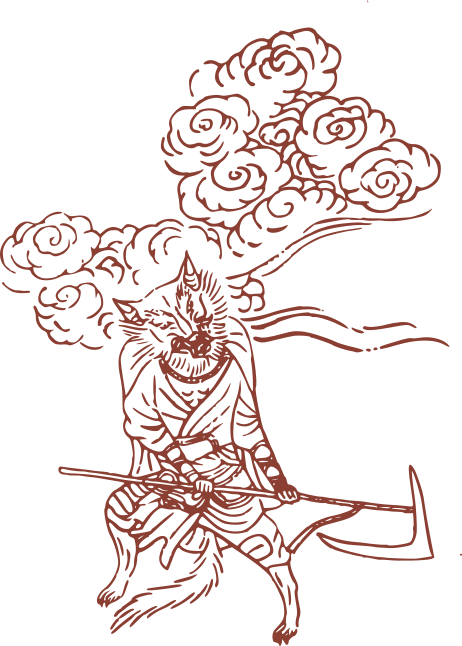
Guangmou, "the Great Tactician", was not like his senior fellow pupil Guangzhi. From a young age, His heart yearned to be a legendary yaoguai master, remembered for ages.
But fate had other plans. When old Lingxuzi sent his beloved disciple to Guanyin Temple to be a monk, old White Snake Guai grew worried. The snake feared it was old Lingxuzi's ploy to win favor with the Black Bear Guai, and commanded Guangmou to join the monkhood as well.
Before he left, the snake warned him: never fall behind, least of all behind Guangzhi. But no matter how hard Guangmou tried, Elder Jinchi never seemed to favor him as much as Guangzhi, even when he learned faster and trained harder. Guangmou consoled himself, believing this stemmed not from his own failings, but from the snake's ham-fisted meddling, which had turned the Elder against him. He found solace in the notion of returning to the mountains one day, when he could embrace his yaoguai nature, unshackled by such trivial concerns.
Guangmou can still recall Jinchi's teachings: "You can be too extreme, too uncompromising. Always leave some room and some things unfinished." But the day Jinchi saw the Kasaya of Eversparks, he desired it so intensely that he forgot his own words and wept long into the night. Guangmou saw the thought taking root in the old monk's heart: to kill for this prize. Everyone shied away from the idea, but Guangzhi boldly spoke the truth.
Guangmou seethed with inexplicable rage. In his mind, a scheme within a scheme began to take shape. As Elder Jinchi drank tea with the two monks, Guangmou glimpsed an untamed malice in the monkey's eyes—a hunger for vengeance. Building on Guangzhi's gambit, Guangmou goaded and prodded, weaving a merciless plot that left no room for escape. The old monk was delighted, and for the first time, he acknowledged Guangmou's wit.
With his plan set, Guangmou knew that doom would strike that night. Summoning a gust of wind, he hid in the bamboo grove behind the mountain. As anticipated, a great fire broke out that night. But it failed to kill the two journeying monks as intended. Instead, it burned the entire temple to the ground.
Alas, the world harbors such petty souls, capable of ensnaring the lofty and vanquishing them with cunning plots. Perhaps this is what is meant by "slaying with a borrowed blade."
This text tells the story of Guangmou, a yaoguai (supernatural creature) who pretends to be a monk but is actually deceitful and ambitious. He was sent to the Guanyin Temple to act as a monk at the same time as another pupil, Guangzhi. Old Lingxuzi had sent his beloved disciple to the temple, and the White Snake Guai, who is Guangmou’s master, insisted Guangmou go too because she feared Lingxuzi’s move was really a political ploy to curry favor with the Black Bear Guai. The White Snake warned Guangmou never to fall behind, especially not behind Guangzhi.
Guangmou’s true goal was to be remembered as a legendary yaoguai master. He trained hard and resented that Elder Jinchi, the senior monk, seemed to favor Guangzhi more than him. Guangmou believed the White Snake’s meddling had turned Jinchi against him, and he comforted himself with the idea that one day he would return to the mountains and embrace his true yaoguai nature, free of monastic constraints. Although Jinchi taught moderation—“always leave some room and some things unfinished”—Guangmou did not live by those lessons.
Everything changed when Elder Jinchi saw the Kasaya of Eversparks, a coveted prize. The elder desired it so strongly he began to think about killing to get it. Most people balked at that idea, but Guangzhi spoke the truth openly. Guangmou reacted with rage and opportunism: he noticed a growing malice, described as being in “the monkey’s eyes,” a hunger for vengeance, and he built on what Guangzhi had started. Guangmou goaded Jinchi and wove a cold, merciless plot that left no escape for anyone involved. The elder was pleased by the plan, and for the first time he acknowledged Guangmou’s cleverness.
Guangmou put the plan into action that night. He summoned a gust of wind and hid in a bamboo grove behind the mountain, expecting doom to follow. A great fire did break out that night, and although the fire failed to kill the two journeying monks it had been intended to kill, it did destroy the entire temple. The scheme achieved destruction even if it did not produce the exact deaths Guangmou had planned.
The ending is a bleak lesson about deceit and manipulation. Guangmou, outwardly a monk but inwardly serpent-like, betrayed his master and the teachings he was supposed to follow. He used Jinchi’s desire and anger as a “borrowed blade” to do his dirty work, showing how petty, scheming people can bring down larger institutions by enlisting others to carry out the violence. The temple’s destruction stands as the consequence of those betrayals and of using other minds to commit evil.