ENG
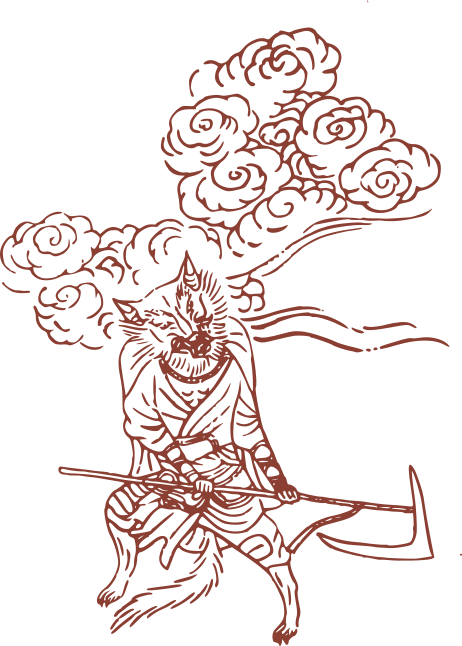
Fiery tails upon its forehead,
Preying by the mountainside.
The skilled one shuns the wars it dreads,
The unskilled roars with reckless pride.
The Sage Stone Monkey, with his inherent wisdom, learned the ways of human manners and speech during his travels across various realms and later achieved mastery of the Dao at Mount Lingtai. Setting aside his natural endowments, let us now examine his later pursuits in enlightenment.
When he left in a huff at Yingchou Stream, the Old Loong King reasoned with him, and he returned to admit his mistakes. He abandoned arbitrary actions and always heeded sound advice.
He forged brotherly bonds with yaoguais, engaged in jest with immortals, and exchanged banter with Bodhisattvas. His amiable nature endeared him to all, who were ever willing to offer their assistance. He had a sense of decorum and propriety.
He had the ability to summon wind and rain and could seek out loongs. He could transform into guais for scouting or borrow vessels when needed. In times of trouble, he sought the aid of higher beings, seldom relying on brute force.
This Feng-Tail General, with multiple eyes on his head, had a keen understanding of both himself and his enemies. He was adept at leaping and dodging, avoiding powerful foes whenever possible, and displayed a touch of the monkey's cleverness. It's no wonder that the crown on the monkey's head grasped his nimble thoughts so well.
The story describes the Sage Stone Monkey, a supernatural monkey who already had natural gifts but then learned human manners and speech during wide travels. He later reached a high level of spiritual mastery, called mastery of the Dao, at Mount Lingtai. The text asks us to focus on what he did after gaining those natural and spiritual advantages — his later efforts toward real enlightenment and social refinement.
At one point he stormed off in anger at a place called Yingchou Stream. The Old Loong King talked him through it, convinced him to come back, and the monkey admitted he had been wrong. After that episode he stopped acting on impulse, stopped doing arbitrary things, and started listening to good advice instead of refusing it.
A big part of his change was social. He made brotherly ties with yaoguais (other spirits or demons), joked with immortals, and even traded banter with Bodhisattvas. Because he was friendly and had a sense of decorum and propriety, lots of different beings liked him and were willing to help him when needed. That social network became a real resource.
He kept and used a variety of powers in careful ways. He could summon wind and rain and call out to loongs (dragons). He could transform into guais (spirit forms) to scout or borrow vessels when a task required them. When he faced danger he usually asked higher beings for help rather than just fighting his way through; brute force was a last resort, not his default tactic.
The passage also calls him the Feng-Tail General and notes he had many eyes on his head, which symbolizes a clear understanding of himself and of his enemies. He was quick, good at leaping and dodging, and used monkey-like cleverness to avoid direct confrontation with stronger foes. The crown on his head is mentioned as something that "grasped his nimble thoughts"—the picture the text gives is of a very alert, disciplined figure who combines agility, awareness, social skill, and restraint rather than relying only on raw power.