ENG
Within a flick of the finger, lotus flowers bloom and wither.
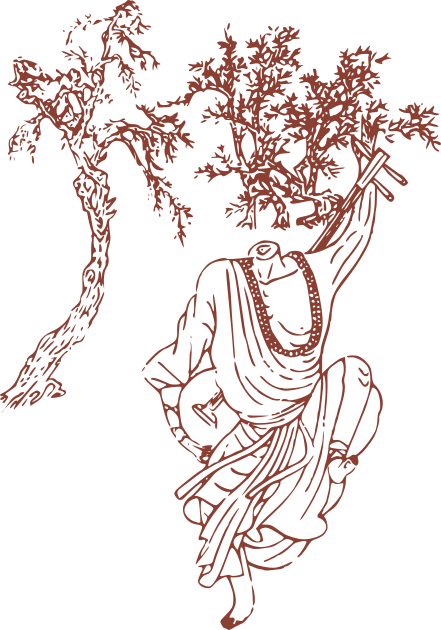
Thought yourself mighty, yet ended up headless.
From your blood and pus, lotus flowers bloom restless.
Coaxed, enticed, and stabbed, by the words of auspiciousness,
Your link to Buddha's wisdom severed, your mind lost in the incense dust, breathless.
The truest of the truth, the kindest in kindness, and the fairest in fairness, you sought and lost,
Principles shattered, head twisted, and body crossed.
Tenderness forsaken you, your uprights exhaust,
Eyes clouded, stars dimmed in frost.
May your body bring prosperity and
The red lotus thrives in hostility.
This passage tells of a sudden, violent fall. It opens with the image of lotus flowers blooming and withering in an instant, then addresses a person who thought themselves powerful but ended up headless. The scene mixes physical violence with spiritual meaning: after the injury, lotus flowers grow from the person's blood and pus, an image that connects death and bodily decay to the growth of these flowers.
A key force in the story is a voice or influence described as “words of auspiciousness.” Those words coaxed and enticed the person and then stabbed them — meaning the person was seduced by promises or flattering speech and ultimately betrayed. That betrayal severs their connection to Buddha’s wisdom; their mind is described as lost in incense dust and breathless, which signals a spiritual disorientation and the loss of clear awareness.
The person is said to have sought the highest ideals: truth, kindness, and fairness. But in the end they lose those things. The text lists consequences in both moral and physical terms: principles shattered, head twisted, body crossed, tenderness forsaken, and uprightness exhausted. Their eyes are clouded and the stars—symbols of guidance—grow dim, which emphasizes that they lose moral clarity and the ability to see what is true or right.
The major violent event is literal and symbolic at once: coaxing and flattering speech lead to stabbing and a severed head, and from the wound lotus flowers spring. The final lines shift to an outcome where the dead body brings prosperity and a “red lotus thrives in hostility.” That implies the person’s death becomes the source of something valuable or used by others, even as it grows from a hostile, violent situation.
Taken together, the passage warns that being seduced by empty or deceptive promises can destroy both body and spirit. The severing of the link to Buddha’s wisdom describes a permanent spiritual loss, and the red lotus thriving in hostility suggests that the benefits of that fall—wealth, power, or influence—may go to those who created or survived the violence rather than to the fallen person. The tone is accusatory and cautionary: moral failure and gullibility lead to violent ruin, and the aftermath can feed others’ prosperity even when it came from your destruction.