ENG
The wolf's heart was once kind and sound,
Misled, however, consumed by desire.
The path to return was once easily found,
Yet fate was sealed by the words of a liar.
There was a year when a young wolf followed a grey elder wolf to learn the art of hunting. The master taught him that a great hunter strikes swiftly and surely, sparing their prey from suffering. The young wolf pondered this long and hard. After years of training, he devised his own killing technique. He thought his master would be pleased with his progress, but instead, the elder wolf scolded him for disrupting the circle of karma and told him to repent. The young wolf's mind swam with confusion at his master's seeming contradiction.
And so, the young wolf left Black Wind Mountain and wandered the lands. On his travels, he heard folks whisper that wolves, though hardy and loyal to each other, were brutal, vicious, and treacherous. The wolf guai grew more perplexed. It seemed his years of training went against the ways of the world.
One day, as he passed through the New West, he heard tales of a dharma of ecstasy in that place that could free a troubled mind. He sought an audience with the abbot.
The abbot was a chubby monk in yellow robes who loved to transform. He heard out the wolf guai's woes and counselled, "Wolves are born to hunt, to slay. It is the way of your kind. Men are not the same; they are born to plough and plant, to reap and sow. Frail and feeble, such is their lot. They seek to leash you wolves with false pre-empts, for they hope to escape your fangs and claws. But heed me, wolf: each kind must follow the call of their blood, the song of their soul. Why should you bow to the mewling of men?"
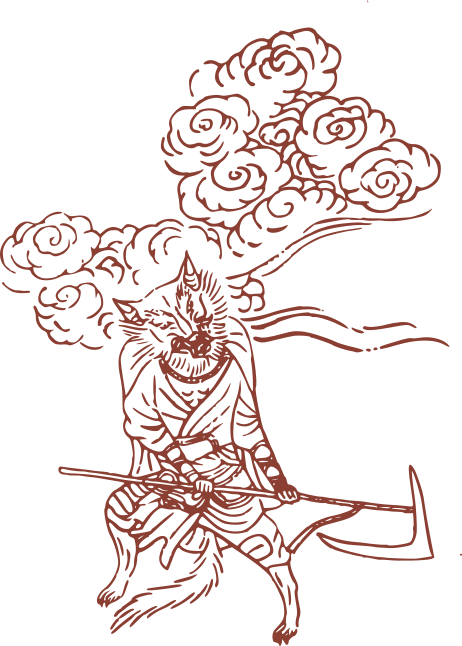
These words lit up the wolf guai's mind. At that moment, he knew his path lay within the halls of New Thunderclap Temple, where he would walk the road to ecstasy. The chubby monk laughed, "In my temple, we bow to none save our own hearts. Beware, for those who fear death have no place here." The wolf guai gladly accepted and became the monk's most loyal guardian. Armed with a scythe, he is now bound by no code save his own savage joy. Heed not a word from his tongue.
This story begins with a young wolf who was once kind but became confused and pulled away from that kindness. He apprenticed to a grey elder on Black Wind Mountain to learn hunting. The elder taught that a true hunter kills quickly and cleanly to spare prey unnecessary suffering. After years of training the young wolf developed his own killing method and expected approval, but the elder scolded him, saying his new method upset the circle of karma and ordered him to repent. The young wolf left in confusion.
As he wandered, he heard people calling wolves brutal, vicious, and treacherous. Those whispers made him question whether his training — meant to be merciful — actually fit the world. He felt torn between the elder’s teaching about sparing suffering and the harsh reputations others gave his kind.
The wolf then learned of a place in the New West where a different teaching, a “dharma of ecstasy,” could free troubled minds. He found the abbot of New Thunderclap Temple, a chubby monk in yellow robes who liked to transform and who listened to his doubts. The abbot told him plainly that wolves are born to hunt and kill, while humans are born to farm; humans try to restrain wolves with rules because they fear being eaten. The abbot argued that each being should follow its nature and that wolves should not bow to people.
Those words changed the wolf. The abbot’s counsel convinced him to join New Thunderclap Temple and follow this road to ecstasy. The abbot declared that in the temple they bow only to their own hearts and that anyone who fears death has no place there. The wolf became the abbot’s most loyal guardian, took up a scythe, and abandoned any code except his own savage joy.
The clear implication is that the wolf could once have returned to a kinder path, but he was misled by the abbot’s persuasive doctrine — the “liar” whose words sealed his fate. Now he defends the temple, embraces violence and death as part of ecstatic faith, and cannot be trusted to speak honestly; the final warning is to heed not a word from his tongue.