ENG
In my lowly life, the end is here,
Soul adrift, my body lingers there.
Once suffered the wicked wind's cruel sting,
No peace shall wandering ever bring.
In the shadow of Yellow Wind Ridge, where gusts weave labyrinths of sand, trade seldom reached here save for a lone hamlet downhill-the only bazaar in the land. Among the market stands, an Everlife Shop stood as the sole purveyor of coffins.
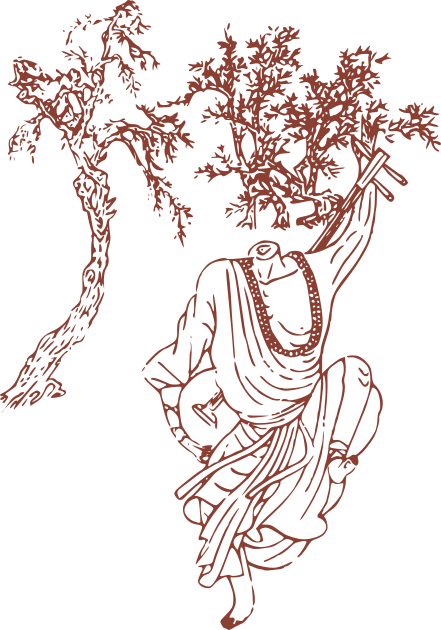
On that fateful day, the shopkeeper idled inside when a man of lumbering gait entered, garbed like a beggar. As the shopkeeper rose to shoo him away, the man spoke, "Hold, sir. I've come not to beg but to buy coffins." With quiet words, he told of his village laid to ruin by bandits and his need for four coffins to lay the dead to rest. Suspicious but intrigued, the shopkeeper agreed to a trade in their native herbs, Suoyang and Congrong.
The shopkeeper gathered his lads and followed the man, with four coffins on an oxcart. Laboring through sand and wind, they reached the village at dusk. Here, the man muttered, "'All life ends and returns to earth.' These winds can do harm, and if our bodies are not properly buried, our souls might be twisted. Please, sir, bury my family with these coffins. We had Suoyang and Congrong in our hearth. Take as much as you like." And with that, he vanished.
Entering the village, the shopkeeper found all living things slaughtered, not a soul left alive. There, before a grand dwelling, lay the man and his kin-long dead. Hurriedly, they entombed the four corpses atop a scenic cliff, took nothing, and fled for their lives.
This story takes place near Yellow Wind Ridge, a windswept area where sand and gusts make travel and trade rare. Downhill from the ridge there is a single small hamlet with the only market for miles. In that market the Everlife Shop is the only place that sells coffins. The opening lines set the mood: the narrator speaks of a lowly life, a drifting soul, and a belief that the cruel wind can harm the dead and keep souls from finding peace.
The main human characters are the Everlife Shopkeeper and his helpers, and a large man dressed like a beggar who appears at the shop. The beggar does not come to beg. He asks quietly to buy four coffins because his village has been destroyed by bandits and he needs to bury the dead. The shopkeeper is suspicious but listens, and they agree to trade the coffins for herbs the beggar offers: Suoyang and Congrong.
The beggar explains his motivation clearly: he thinks the winds around Yellow Wind Ridge can do harm to unburied bodies, and that if bodies are not properly buried then the souls might be twisted and not find rest. He repeats a saying about life ending and returning to earth, offers the herbs from his hearth as payment, asks the shopkeeper to bury his family, and then disappears from sight.
The shopkeeper and his lads load the four coffins onto an oxcart and follow the man across the sand. At dusk they reach the village and find it completely slaughtered; not a single living person remains. Before a grand house they find the beggar and his relatives dead among the others. The shopkeeper and his men quickly bury the four corpses on a scenic cliff above the village, take nothing from the houses, and flee for their lives.
The immediate result is that the bodies are buried and the shopkeeper and his men escape, but the village is gone and everyone is dead. The story makes clear the villagers believed proper burial mattered to protect souls from the dangerous winds, and it leaves the man’s sudden vanishing and the total massacre as unsettling facts: the shopkeeper paid with herbs, carried out the burials, and was left with the cost and the memory of a place destroyed by bandits and a wind-haunted belief about restless souls.