ENG
In a world where paths are never clear,
Where directions are oft lost in fear.
In the spear-tip a mighty and noble stand,
Behind the shield, a pride so grand.
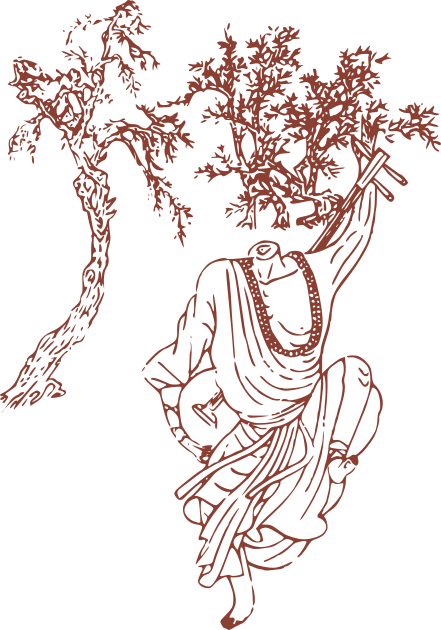
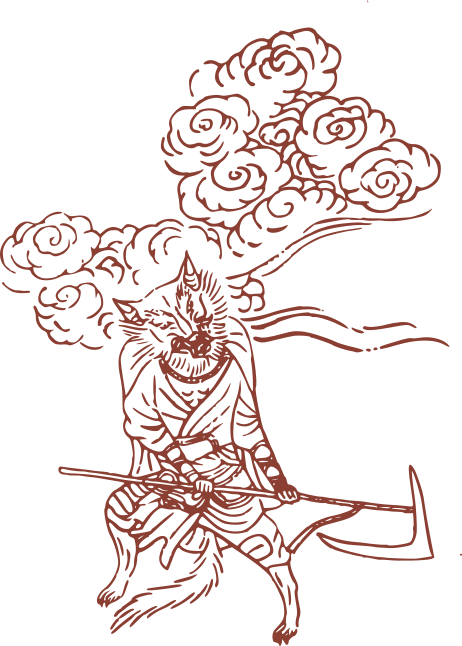
The priests of Windrest were proud warriors. Their shields were emblazoned with the tiger, and they danced with crescent-shaped spears, commanding a presence that frightened off guais. During funerals, they would lead the procession, striking their shields and proclaiming themselves as leading generals.
The priests held a high status in Windrest. Even the minor guais in the mountain would frequently offer them rare delicacies, hoping to ensure their peace and to avoid being banished.
One day, a settler noticed an increase in the mountain's guai population and sought the advice of the sorcerers. Dismissive, the priests responded, "The guais and us, we inhabit the same mountains; an encounter would be inevitable. Since they present us with tributes, we might as well spare them."
A few years later, strange winds began to sweep across the valley, stirring up chaos. The guais ran wild, causing trouble frequently. Dressed in their warrior attire, the priests raised their shields and ventured out of the settlement to confront the unruly guais.
However, the guais didn't fear them. The priests' spears and shields, which were once their pride, could only repel a few minor ones before they were surrounded. The leader, a red-robed rat, sneered, "We had peace only because of the Bodhisattva meditating up in these mountains. You mortals surely didn't think you could actually defeat us, did you?"
Seeing the priests unable to repel the guais and instead provoking their anger, the settlers locked the gate of Windrest, demanding that the guais be expelled before they could return.
The priests met their end on the mountains, remaining in their battle stances, now haunting unwary travelers.
The story takes place in a dangerous, uncertain world where people often lose their way and live in fear. In the valley of Windrest, the religious leaders were also warriors. They wore tiger-emblazoned shields and used crescent-shaped spears. Their public rituals were aggressive: at funerals they would strike their shields, lead the procession, and boast that they were the leading generals.
Those priests were highly respected and feared. Minor mountain creatures called guais treated them with deference, offering rare food and gifts to stay on their good side and avoid being driven away. The priests believed this tribute proved their authority and that they kept order between mortals and the guais.
A settler noticed the guai population growing and went to the sorcerers for advice. The priests dismissed the concern. They argued that humans and guais shared the mountains and that encounters were inevitable; since the guais brought tribute, the priests saw no reason to act. Their attitude was complacent and confident in their own status.
A few years later, strange winds stirred chaos across the valley and the guais began acting violently. The priests put on their warrior gear, raised their shields, and left the settlement to confront the guais. Their weapons could only fend off a few small guais before they were swarmed. The guai leader, a red-robed rat, taunted them and said the real reason there had been peace was the Bodhisattva meditating in the mountains, not the priests’ strength.
The settlers, alarmed by the priests’ failure, locked Windrest’s gate and demanded the guais be expelled. The priests themselves were killed on the mountains while still holding battle stances. Their bodies, or their restless spirits, now haunt travelers. The clear implication is that the priests’ pride and reliance on tribute, rather than real power or the true protection provided by the Bodhisattva, led to their downfall and left the settlement vulnerable.