ENG
Endless toil, no rest in view,
Joy of nature, never ours to pursue.
Serving others, in vain we strive,
Lamenting years, centuries alive.
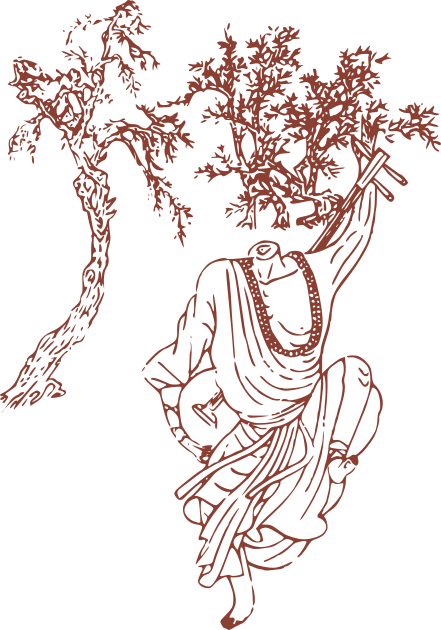
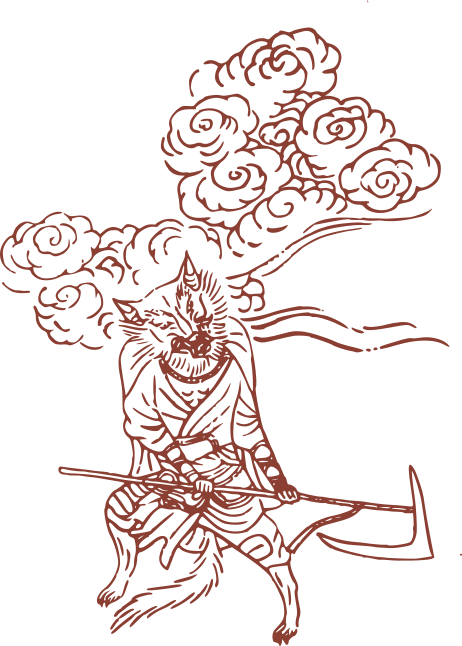
The stalwarts summoned from the underworld by the Keeper were the lowest-ranking soldiers back there. With their daily duties to maintain the flow of the underworld, being sent to the mortal realm was akin to the days of rest-a break from their relentless toil.
One day, as they patrolled Flaming Mountains, four stalwarts shared their stories. One pointed to Furnace Valley and remarked, "This lava here makes me think of my task back underground. Those who committed arson in life are sentenced to embrace searing-hot copper pillars naked in our Copper Depth. We had to fuel the fire and scrape off burnt flesh once and again. If we had a Firefall like it here, it would surely make things easier."
Another added, "True. And those who broke families in life go to our Iron Depth. We plant an edge of the blade tree into their back and hang them on the tree. Our endless days are spent sharpening the blades and trimming the trees. Sometimes, the blade cuts through their flesh and they fall with wounds wide open. That's when we stitch them up, carry them from the ground, and hang them on the blade again. A giant iron ball like the one ahead would make the job much simpler."
The third one chimed in, "You have it easy. Those who torture animals go to our Bull Depth. There, they are trampled and gored by lavabulls. We must tend the bulls, fit them with iron hooves, and sharpen their horns. The crushed corpses must be dug out occasionally, lest they clog the path of the bulls. A flaming cart would be a much better solution."
The last stalwart, gazing at the landscape of Flaming Mountains, exclaimed, "This place is better than any of our Depths. Don't you see? This is the best Depth with state-of-the-art torturing tools. I am now living in my dream!" Hearing this, all his companions spat in disdain and left.
The poem at the start sets the mood: these beings live in nonstop, miserable labor. They have no chance to enjoy nature or rest, they serve others without reward, and their existence stretches on for years or even centuries. That misery is the everyday background for the characters we meet.
The characters are four stalwarts, low-ranking soldiers from the underworld who were summoned to the mortal realm by a figure called the Keeper. For them, being sent aboveground to patrol the Flaming Mountains is treated like a rare break from their regular duties below. While they walk, they trade stories about the specific tortures and tasks they perform in different parts of the underworld.
The first stalwart talks about the Copper Depth, where people convicted of arson are punished. Those victims are forced to embrace searing-hot copper pillars while naked. The stalwarts’ job there is to keep fires going and to scrape burnt flesh off the victims again and again. He says that if there were a Firefall like the one in the Flaming Mountains, their work of managing the victims and fires would be much easier.
The second stalwart describes the Iron Depth, where people who broke families are punished. There, the edge of a “blade tree” is planted into a victim’s back and the victim is hung on the tree. The stalwarts spend endless days sharpening blades and trimming the trees. Sometimes a blade cuts all the way through, the victim falls wounded, and the stalwarts stitch them up, carry them back and hang them on the blade again. He says a giant iron ball would simplify that job.
The third stalwart explains the Bull Depth, where those who tortured animals are trampled and gored by lavabulls. The stalwarts must tend the bulls: fit them with iron hooves, sharpen their horns, and dig out the crushed corpses when they clog the bulls’ path. He thinks a flaming cart would make clearing the corpses much easier. The fourth stalwart, however, prefers the Flaming Mountains above all; he declares it the best Depth because it has “state-of-the-art” torturing tools and says he is living his dream. The others react with disgust—spitting and leaving—so the scene ends with clear disagreement about the work and with the unsettling picture that these servants take pride in different forms of deliberate, mechanical cruelty.