ENG
Time gallops like a horse so fair,
Here and there, seeming without care.
Past flows like water in its course,
Dreams buried deep, without remorse.
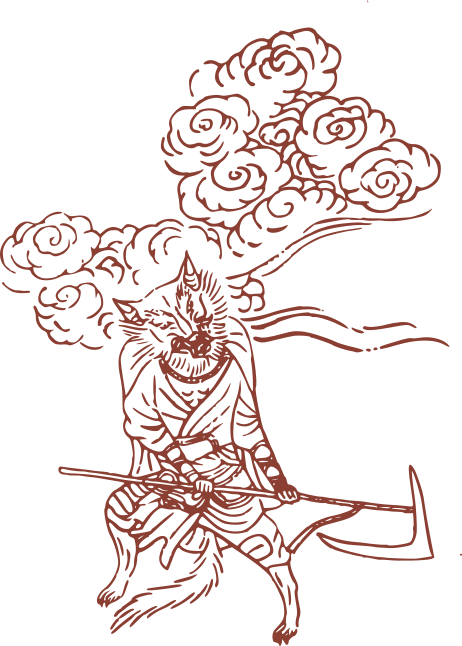
The gates of the City of Injustice are guarded by the charfaces. Unlike soul reapers, they wield blades of karmic flames, burning lost souls to ash-hence their perpetually smoked visages.
One day, two charfaces at the gate caught a soul trying to sneak out. As one raised his flaming blade to strike, the desperate soul pleaded, "Spare me, kind sirs. Should I revive, I'll burn ten houses of paper ingots in your honor." The other charface restrained his companion and proposed, "Let's have a wager then. If you win, you go free. But if you lose, blame your own luck." The soul asked, "What would be the wager?" And he answered: "If half the souls entering the city today wish to return to life like you, you win." With that, he handed over paper and ink and tasked the soul with recording the names and earthly obsessions of those newly deceased.
As the gate closed for the day, the soul hurried to the charfaces and declared, "I've won! I've won indeed!" The charfaces presented the list to the Gatemaster, who found that it matched perfectly in both numbers and names and even included details the deceased themselves hadn't revealed. Satisfied, the Gatemaster held the soul in high regard, generously rewarded him, and said, "I know you seek to leave the city, but the gates are shut for today. Perhaps you should come again tomorrow."
Months passed with the soul returning daily, and each day a similar bet was made. Over time, the soul ceased longing for a return to life and took up a role as a scribe under the Gatemaster.
Alas, it makes one wonder: should we look ahead and accept whatever future awaits us, or stay committed to steadfast goals? Perhaps there's no right answer. What matters is the willingness to make your choice.
The story opens with a mood about time passing and lost dreams, then moves into a specific setting: the City of Injustice. The city’s gates are watched by beings called charfaces. They are not soul reapers; instead they use blades of karmic flame that burn lost souls to ash, which is why their faces are always smoked and scarred.
One day two charfaces catch a soul trying to sneak out of the city. The soul begs for mercy and promises that if it is returned to life it will burn ten paper houses of offerings in their honor. One charface is ready to kill, but the other stops him and proposes a wager instead of immediate judgment.
The wager is specific: if half the souls entering the city that day wish to return to life like the pleading soul, then the soul wins. The charface gives the soul paper and ink and tells him to record the names and earthly obsessions of everyone newly deceased that day. At closing, the soul reports back, claiming victory.
The charfaces give the list to the Gatemaster, who checks it and finds it perfectly accurate in numbers, names, and even details the dead hadn’t publicly revealed. The Gatemaster praises and rewards the soul but tells him the gates are closed for the day and to come back tomorrow. The soul keeps returning every day, winning the same wager repeatedly, and over months he stops yearning to go back to life and instead becomes a permanent scribe under the Gatemaster.
The final implication is both narrative and thematic: the soul’s original goal—to return to life—was gradually replaced by a new role and new attachments. The text raises the question of whether one should accept whatever future arrives or stay true to an original aim. It doesn’t give a clear answer; what it emphasizes is that making a choice and living with it is what matters.