ENG
He who brings tales of fault and blame,
Is often caught in the very same game.
Trust not the one who seems most fair,
And in their 'goodness', be aware.
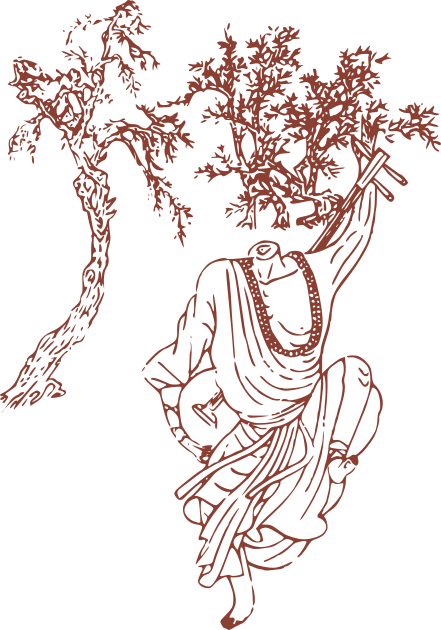
In the southern camp of the Kingdom of Yuetuo, near the western side of the Flaming Mountains, a cook in the army was tasked with delivering food to the soldiers each and every day. During his routine, he often noticed a shadowy figure trailing him. When his courage led him to confront it, he discovered it was a pottery figurine, armed with an arrowless bow-a truly peculiar sight.
It is known that only the guilty are haunted. The cook, assured of his clear conscience, demanded, "Why do you always follow me?" The figurine, faceless yet speaking from within, replied, "In a past life, we were from the same town and served together in the army. I was wounded by an enemy arrow and you abandoned me. I was left to succumb to infection and die. My resentment prevented me from reincarnation, and Yama, the King of the Underworld, made me a revenant. I have come now for your life."
Puzzled, the cook asked, "Then why not kill me?" The figurine raised its bow, replying, "This bow shoots only arrows of punishment. You've been reasonably upright in this life, so I find no arrow to strike you. My only choice now is to linger aimlessly." The cook asked if there was anything he could do to stop its wandering, but the figurine spat back, "It was your fault. You should atone, not 'help' me. Your debt will clear once you've recited Buddha's name for me ten thousand times and kneeled to each. Then, I may find peace."
Enraged by such entitlement, the cook argued, "Your fall in enemy hands wasn't my arrow; your failure to evade wasn't my push. Leaving you was a choice, not a crime. Why blame me?" With that, he smashed the pottery figurine with his meal lid. The figurine shattered and turned to dust in the wind.
Alas, even ghosts dread violence. Reflecting on one's actions is essential, and kindness is a virtue. But beware of being exploited for your good heart, lest the accused becomes the accuser.
This story takes place in the southern camp of the Kingdom of Yuetuo, near the western side of the Flaming Mountains. A cook in the army walked his daily route delivering food to soldiers and began to notice a shadowy figure following him. When he confronted the follower, he found it was not a person but a faceless pottery figurine holding a bow with no arrows.
The figurine spoke and claimed they had known each other in a past life: both served in the same army, the figurine said it had been struck by an enemy arrow while the cook abandoned it. Left to die from infection, the figurine said its resentment kept it from reincarnation, and Yama, the King of the Underworld, turned it into a revenant who returned to seek the cook’s life.
When the cook asked why the figurine did not simply kill him, it answered that its bow could only fire arrows of punishment, and because the cook had been “reasonably upright” in this life there were no arrows to shoot. Instead the figurine said it must haunt him until he atoned: the cook must recite Buddha’s name ten thousand times for it and kneel for each recitation, and only then would the figurine be able to find peace.
Angered by the demand, the cook argued that the figurine’s being wounded and failing to escape was not his crime and that abandoning someone in battle was a choice but not a blameworthy crime the revenant could impose on him. In rage he smashed the pottery figurine with his meal lid. The figurine shattered and turned to dust in the wind.
The story closes with a clear moral point. It warns that people who loudly blame others for past harms may be playing the same blame game themselves, and that apparent righteousness can be used to exploit a good person’s conscience. It also says self-reflection and kindness are virtues, but you should be careful not to let guilt be weaponized against you. Even the revenant feared violence, but the deeper lesson is to avoid being manipulated into accepting blame that isn’t truly yours.