ENG
Through omens, he sensed impending blight,
Yet he turned away, veering from the light.
Unaware, the days of plenty ceased to flow,
The nation, infested with rodents, lost its glow.
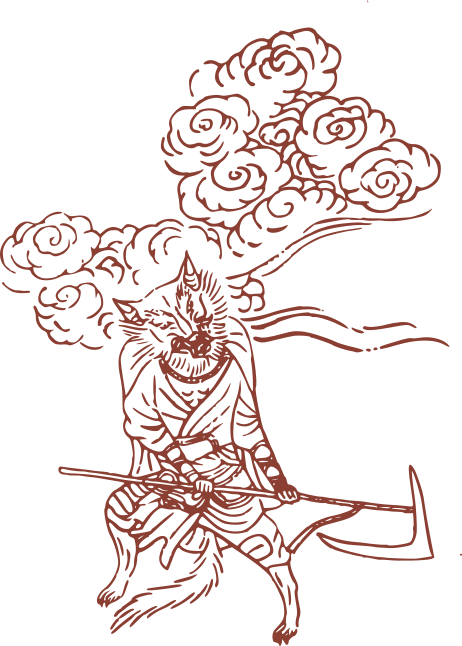
In same year that Kingdom of Sahālī was renamed as Kingdom of Flowing Sands, the "Rodent Reverence Edict" was proclaimed throughout the country. This edict declared rats as celestial beings protected by the king's law, making it illegal to harm them. Whosoever breached this commandment would face the king's judgment. Hence, rat guais from across the land flocked to the kingdom. Although strife ensued between commoners and guais, none dared defy the king's decree. For the well-being of people, the scholars of the Royal Academy planned a petition to implore the segregation of rat guais to the southwest corner of the capital.
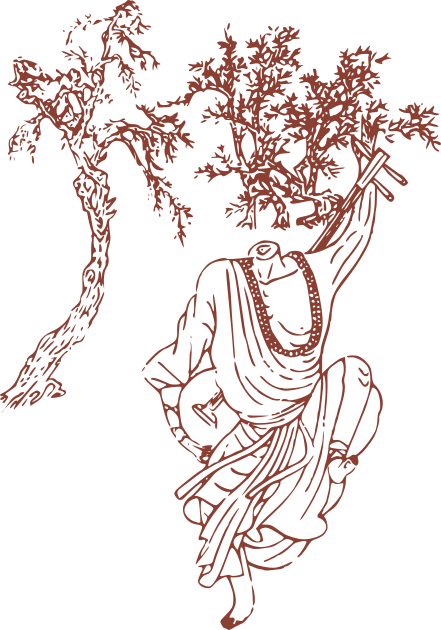
Among these scholars, there was an elder who was deeply skilled in divination. On the day of the petition, right before the scholars were to meet the king, the elder divined for his career, which came out as a grave omen. "Not an auspicious time for it," he told his students the omen in secret, "I advise you to take sick leave with me today". However, his students, faithful and young, heeded him not and went forth gallantly.
Just as the elder stepped outside the palace, the Royal Guards encircled the hall. Shouts of agony then filled the air, unfolding the bloodshed within. Hands covering his trembling ears, the elder slowly made his way home. After three kingless assemblies and a major court reshuffle, he was promoted to Grand Governor, a rank that bestowed him years of wealth and glory. But one day, as he peered into a bronze mirror, he noticed that his nose was elongated, and bristles had sprouted on both sides. Henceforth, he forsook mirrors, knowing he would always bear a rat's visage like all those absented from that petition.
The Kingdom of Sahālī was renamed the Kingdom of Flowing Sands, and in that same year the king issued the "Rodent Reverence Edict." The edict said rats were celestial beings protected by the law and made it illegal to harm them; anyone who broke that rule would face the king’s judgment. Because of the law, rat guais—rat-like creatures the text calls guais—came into the kingdom in large numbers. Their presence caused conflict with ordinary people, and no one dared openly defy the king’s decree. For the sake of the people, scholars at the Royal Academy organized a petition asking the king to force the rat guais to live in the southwest corner of the capital.
One of those scholars was an elder skilled in divination. On the day the scholars planned to present their petition to the court, he cast a divination about his career and received a grave omen. He warned his students in private that it was an unlucky day and urged them to take sick leave and stay away with him. His students, young and loyal, ignored his warning and went ahead to meet the king anyway.
As the elder stepped outside the palace, Royal Guards surrounded the assembly hall. There were cries and visible bloodshed inside; the petitioners who went forward were attacked. The elder covered his ears and walked away, surviving because he had not been inside when the Guards moved in. The narrative makes clear that those who attended the petition suffered violent consequences.
After that violent day there were three assemblies held without a king and a major reshuffle of the court. In the resulting political changes the elder was promoted to the rank of Grand Governor, a position that brought him years of wealth and public prestige. He gained power and comfort where others had been killed or displaced in the turmoil.
But later the elder discovered a permanent, personal consequence: when he looked into a bronze mirror he saw his nose had grown long and bristles had sprouted on his cheeks. He stopped using mirrors because he understood he would always bear a rat’s face, the same rat-like appearance the text says was shared by all those who had been absent from that petition. The story ends with that bitter irony: avoiding the immediate danger saved his life and gave him rank, but it left him with a lasting, shameful transformation.