ENG
With closed eyes, he practices through mere fist,
In silence, discerns the loyal from the twist.
Cutting thoughts, he seeks the pure domain,
Desires quelled, new bonds are slain.
In the temple, all monks could seek guidance from those more skilled.
Among them, the monks who were passionate about fist martial arts always followed the second senior disciple, Non-Able, to practice and train. Their temperament was also similar to Non-Able's, as they were most inclined to fight for justice, earning them the title of "Overseeing Monks."
Since the Non-Able was punished by the master and sent to the Towers of Karma to reflect on his mistakes, the Overseeing Monks lost their protector. As a result, they often suffered greatly when standing up for others.
Troubled, the Overseeing Monks went to ask the master the solution. The master smiled and said, "If you do not see, your mind will be free from obstacles. The greatest affliction of men is weakness. Close your eyes and focus on your own cultivation."
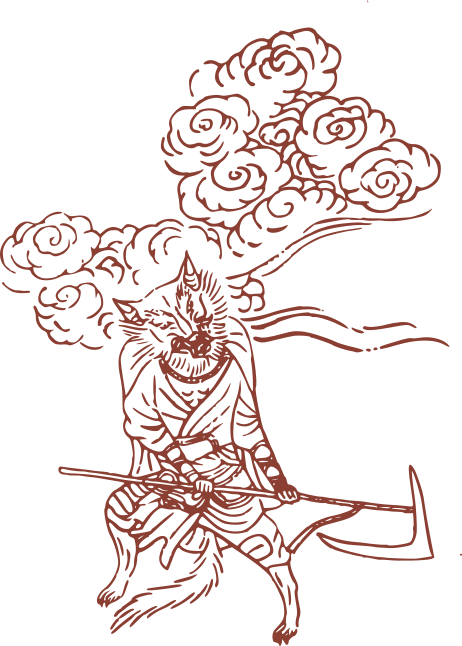
Initially, the Overseeing Monks covered their eyes with cloth, but when they removed the cloth, they still couldn't ignore what they saw and heard. Then, Yellowbrow suggested, "Why not try gouging out your eyes?"
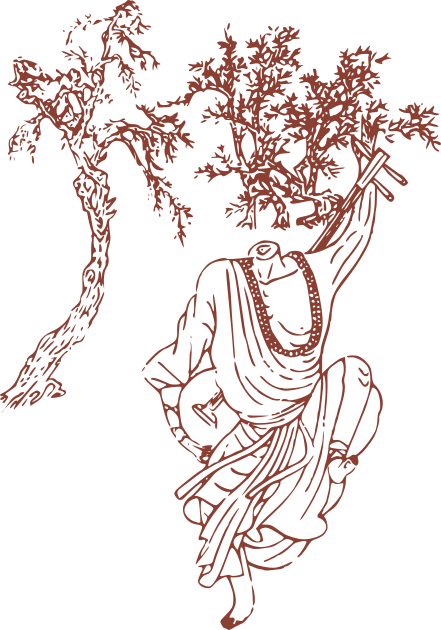
From then on, the temple had a new skill named "Blind Zen". Practitioners of this art nurtured their minds to be as serene as still waters, by turning a blind eye to the distractions of the world.
But can they truly attain stillness? Perhaps any slight sound would only further agitate their restless hearts.
The story takes place in a martial temple where monks learn from more skilled seniors. A group of monks who specialized in fist-style martial arts followed the second senior disciple, called Non-Able, because he shared their temperament: they were hotheaded and fought for justice, so they became known inside the temple as the Overseeing Monks.
Non-Able was punished by the master and sent to the Towers of Karma to reflect on his mistakes. With Non-Able gone, the Overseeing Monks lost their protector and began to suffer when they intervened to help or defend others, because they no longer had his backing or experience to shield them.
The Overseeing Monks asked the master for a solution. The master taught that not seeing would free the mind from obstacles, calling human weakness the greatest affliction, and advised them to close their eyes and focus on their own inner cultivation.
At first the monks simply covered their eyes with cloth, but removing the cloth still left them affected by what they saw and heard. Then a monk named Yellowbrow proposed a harsher remedy: gouging out their eyes. That extreme suggestion led the temple to adopt a new practice called Blind Zen, which trains practitioners to find mental calm by literally turning a blind eye to the world.
The implication is that Blind Zen forces a physical removal of one source of distraction so the mind can be trained to be still. The story ends with doubt about whether true stillness can be achieved this way: even if sight is gone, internal restlessness remains, and other things like sound can still provoke agitation in the heart.