ENG
In foreign lands, it toils and spins,
Weaving cocoons, its work begins.
Unable to transform and soar,
It thrives in the nets once more.
From the southern slopes of Mount Huai, one can gaze upon the radiant splendor of Mount Kunlun, its brilliance stretching for miles, exuding an awe-inspiring grandeur.
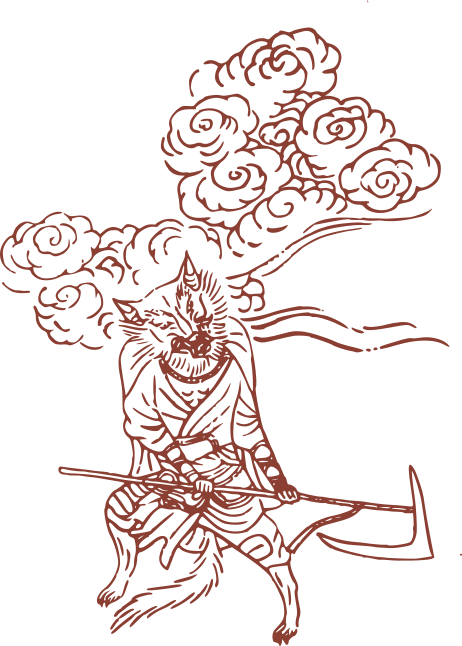
On Mount Kunlun, there exists a creature called the "Tuluo." It resembles a sheep but has four horns and is known to devour humans. Another creature, known as the "Qinyuan," looks like a bee but is as large as a mandarin duck. Its sting is lethal to birds and beasts, and it can wither trees with a mere touch of its venom.
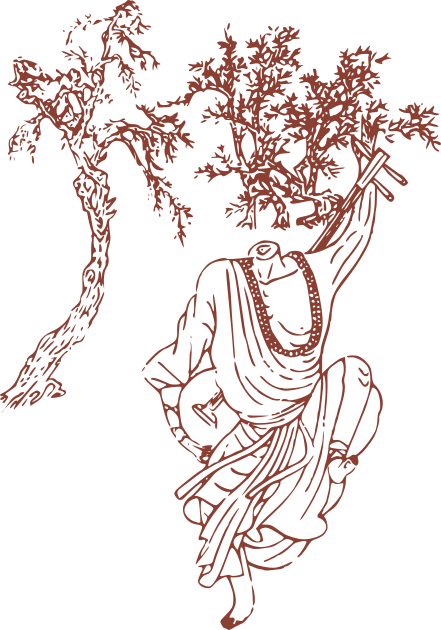
King Mu of Zhou once had the fortune to visit Mount Kunlun. He toured its magnificent palaces, tasted various celestial herbs and delicacies, listened to sweet music performed by beautiful celestial maidens, and saw many wondrous mythical beasts.
When the celestial maidens presented gifts to King Mu, he refused but pointed to the mythical beasts in garden and asked, "May I take one of these extraordinary creatures back with me?" The celestial maidens replied, "The beings of Kunlun drink from the celestial moat and feed on celestial herbs. Even if you take them to the mortal realm, they would lose their form and abilities. It is better not to take them away, for if they transform, we cannot predict what calamities they might cause."
The passage opens by showing Mount Kunlun as a brilliant, awe-inspiring place seen from the southern slopes of Mount Huai. Kunlun is described as full of magnificent palaces, strange plants, and wondrous beasts, and it is also home to celestial maidens who play music and present gifts. The short poem at the start hints that some creatures in foreign places have odd life cycles: they spin cocoons, cannot transform into another form to fly, and end up surviving only when kept in nets. That sets a theme that these creatures behave very differently from ordinary animals.
Two specific creatures on Kunlun are named. The Tuluo looks like a sheep with four horns, but it is dangerous because it devours humans. The Qinyuan resembles a bee but is the size of a mandarin duck; its sting is deadly to other birds and beasts, and its venom can wither trees with a touch. These descriptions make clear that the beasts of Kunlun are both strange in form and hazardous in effect.
King Mu of Zhou is the mortal who visits Kunlun. While there he experiences the place’s wonders: he tours the palaces, tastes the celestial herbs and delicacies, listens to music played by the celestial maidens, and sees the extraordinary animals roaming the gardens. He is impressed by what he finds and becomes curious about the creatures.
When the maidens offer gifts to King Mu, he refuses the material gifts and instead asks if he can take one of the mythical beasts back to his mortal realm. The maidens decline. They explain that the beings of Kunlun drink from the celestial moat and feed on celestial herbs, and that if those animals were taken into the mortal world they would lose their proper form and abilities.
The maidens’ refusal is framed as practical and precautionary: the beasts belong to Kunlun’s environment and depend on celestial sustenance, so removing them would either strip them of their true nature or cause them to change unpredictably. They warn that such a transformation could bring unforeseen calamities, so it is better not to take any Kunlun creature away. The overall message is that these divine creatures are bound to their place, and attempting to transplant them into the mortal world risks harm and instability.