ENG
Lingzhi (灵芝, Ganoderma) is a genus of polypore fungi in the family and are used in traditional Asian medicines. Ganoderma was mentioned in Zhang Heng's (张衡; AD 78–139) Xijing Fu (西京赋).
In Chinese mythology, everything has the potential to give birth to wisdom, the chance to become a "spirit"(精怪, Guai), and the faintest hope of becoming an immortal. They are not initially good or evil, and their nature is usually determined by their experiences.
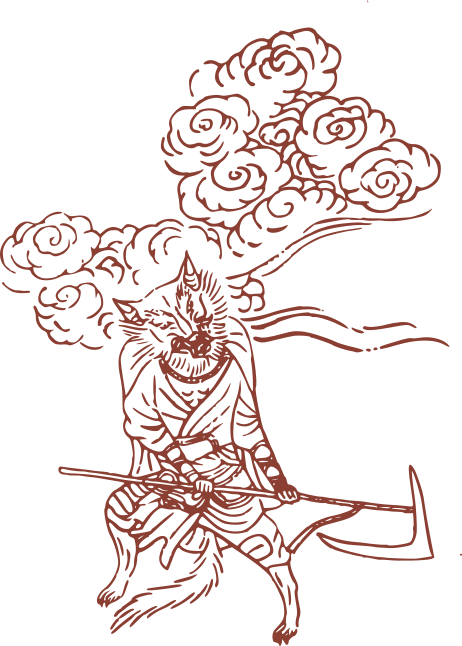
In the concept art on the right, Lingzhiling is armed and looks evil. This may be related to the plot of "Black Myth".
Lingzhi refers to a real group of fungi, also called Ganoderma, that people in Asia have used for medicine for a long time. The name and the fungus itself appear in historical Chinese writing, including Zhang Heng’s Xijing Fu from the first and second century AD. That shows lingzhi has long been part of Chinese culture and stories.
In Chinese mythology, the world is alive with the potential for anything to become wiser, to turn into a spirit (called a guai), and even to hope for immortality. That idea isn’t about people only — plants, stones, and fungi can also develop consciousness or spirit qualities over time. Their becoming a spirit is a process tied to experience, not an instant change.
Those newly born spirits are not automatically good or evil. Mythology says their moral nature is shaped by what they go through. Positive experiences can make a benign or helpful spirit; negative experiences or harm can twist it into something hostile. So a spirit’s behavior reflects its history rather than an inborn moral alignment.
The concept art referenced shows a creature called Lingzhiling, which appears to be an armed, aggressive-looking version of lingzhi. That visual suggests this particular spirit has taken on a violent or hostile form. The text warns that this portrayal may connect to the game's story, indicating Lingzhiling could play an antagonistic role.
For the game Black Myth, the implication is that lingzhi-based spirits like Lingzhiling might be characters shaped by events in the game world. Because mythological spirits are morally flexible, Lingzhiling might be an enemy, a tragic figure, or something more complex, depending on its experiences in the plot. The art and the myth together set up an expectation of ambiguous morality and a backstory rooted in traditional ideas about spirits forming from natural things.