ENG
High and mighty, in the finest attire,
Yet a twist of fate, from life to mire.
The underworld trials are no mere lore,
They know it all when they see your core.
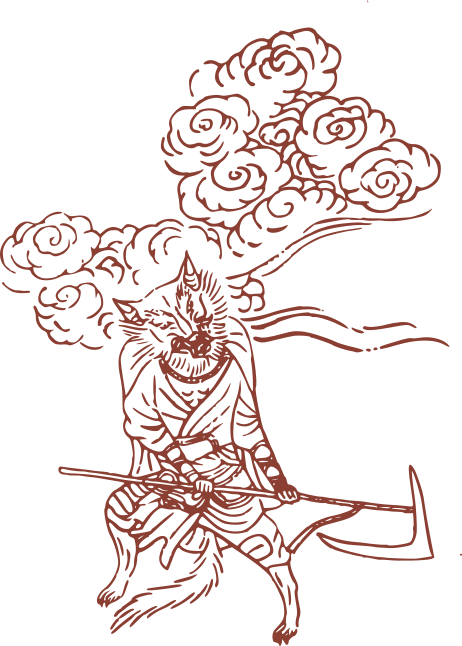
In the Kingdom of Pure Joy, there was an official of high standing. A skeptic of spirits and deities, his path to power was paved with the lives of many. As age and illness beset him, he found himself bedridden. In a feverish sleep, he dreamt of two bull-headed guais emerging from blazing flames. Standing upright in armor, they declared they were to take him to the underworld for trial and urged him to settle his affairs with the living.
Startled awake and realizing the gravity of his past wrongdoings, the official hastily told his family to gather monks and daoists to perform rituals in the house. He dispelled his wealth through acts of charity, feeding the poor, donating to temples, and gilding Buddha statues. All the rituals and charity were done in the hope of sparing himself from the torments of the underworld. His deeds stirred the city; praises for his generosity echoed in the streets.
Then, came another dream. The bull guais, with a scroll in hand, came to claim his soul.
He protested, "I've done much good recently; surely, it offsets my past wrongs!" One guai explained, "True, you've done something good. But that was after how you falsely accused the righteous, how you betrayed your peers, how you extorted the peasants, and how you plundered for your wealth. For those, Yama still awaits your trial, and to the underworld, you must go." The other guai sneered, "Good deeds are good, but evil deeds are still evil. Your end as a greedy official is sealed."
With that, they shackled his soul with iron chains and dragged him into the flames, leading him towards the underworld. That very night, the official died in agony and fear, eyes bulging wide, losing control of his bowels.
This story takes place in the Kingdom of Pure Joy and centers on a high-ranking official who publicly disdained spirits and gods. He rose to power by harming others and enriching himself at their expense. When he grew old and fell ill, he became bedridden and had a frightening dream: two bull-headed guais rose from flames, wearing armor, and told him they would take him to the underworld for trial unless he settled his affairs.
Worried, he woke up and tried to make amends. He summoned monks and daoists, paid for rituals, gave away his wealth in charity, fed the poor, donated to temples, and gilded Buddha statues. He hoped these last-minute acts would save him from punishment, and the city praised him loudly for his generosity.
A second dream came that night: the same bull-headed guais returned with a scroll to claim his soul. The official protested, saying his recent good deeds should cancel out his earlier crimes. He argued that his charity and rituals proved he had changed.
The guais answered that the timing and weight of his actions mattered. They acknowledged he had done some good, but said it came after serious offenses: falsely accusing the righteous, betraying colleagues, extorting peasants, and plundering to build his wealth. They told him Yama, the judge of the dead, still awaited his trial and that his fate would be decided in the underworld. One guai made clear that good deeds cannot simply erase evil ones.
They then shackled his soul with iron chains and dragged him into the flames toward the underworld. That same night he died in terror and agony, his body showing extreme fear. The clear implication is that last-minute repentance and public displays of piety do not automatically undo a lifetime of deliberate wrongdoing; the story warns that people are judged on their whole life, not just their final acts.