ENG
When night falls deep, his light shines down,
Summoned is the Yin, suppressed is the Yang.
Like harvesters hastening before the dawn,
He reaps with his blade, and souls are gone.
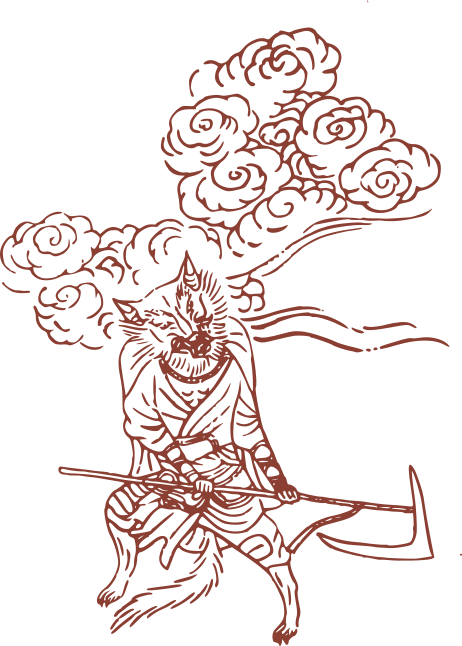
The insect guais loathed patrolling after dusk, as their instinct to chase after light made the nighttime perilous for them. But luck favored them when a tribe of pale-faced yakshas from the west of the place, having traversed the world, chose to settle at the Webbed Ridge and volunteered for the night watch, a task the insect guais were only too happy to relinquish to these newcomers.
The yakshas are proud and fierce by nature. Turned into feral yaoguais, yet they still clung to their old ways in the days they were revered. They kept to their own, with lanterns lit from dusk to dawn, and rarely mingled with the insect guais. To the latter, they were a curious sight with their merriment and banter that paid no heed to hierarchy or status. Yet, what puzzled the insect guais most was the yakshas' bond; close-knit in joy, yet they'd often erupt into disputes and hurl sharp words with no restraint.
One night, a quarrel broke out during an idle chatter among four yakshas on patrol, and their raucous noise woke the insect guais. "Why must you carry on as this?" the insect guais rushed to mediate, persuading them. "Arguing one moment, chummy the next. Why not treat each other with proper respect, like we do?"
In an instant, the quarrel ceased, and in unison, the yakshas retorted, "You are mistaken," one spat. "Only through open discourse, we grow." Another chimed in, "Exactly, when we air out our disagreements, it only makes our bond stronger." A third added, "Indeed. By having each other's backs, we've made it through a lot of tough times. Our harsh words don't mean any harm." The last concluded, "Unlike you insect guais, we hide no secret grievances under the guise of harmony." With that, arm in arm, they departed, leaving the insect guais to dismiss the exchange with bemused eye rolls.
The passage opens with a short, ominous verse that sets the scene: night is dangerous and something like a reaper moves under its cover. That establishes why patrols and night watch matter in this place and why the insect guais dread dusk. Insect guais avoid night duty because their instinct to chase light makes darkness especially risky for them.
A new group arrives from the west: a pale-faced tribe of yakshas who have traveled far and chosen to settle at Webbed Ridge. They volunteer to take on the night watch, which the insect guais gratefully hand over. The yakshas are proud and fierce, and though they are feral yaoguais now, they still keep some of the customs from when they were revered.
The yakshas keep to themselves during the night and keep lanterns burning from dusk to dawn. To the insect guais they are a strange sight because the yakshas are loud, merry, and speak to one another without regard for rank or status. That casual banter and lack of formal respect contrast sharply with the insect guais’ habits.
What puzzles the insect guais most is the yakshas’ way of bonding. The yakshas are close-knit, but they frequently break into heated arguments and throw harsh words at each other. One night four yakshas on patrol argued so loudly that they woke the insect guais, who hurried over to mediate and urged them to stop and behave like the insect guais, with polite respect and hidden grievances.
The yakshas answered that their arguing was deliberate: airing disagreements openly makes them stronger and keeps their loyalty honest. They said their harsh words did not mean harm and contrasted that with the insect guais, who they felt hid resentment behind a false calm. Then the four left arm in arm, and the insect guais were left bemused. The episode highlights a deep cultural difference: one group prefers quiet, orderly respect while the other values blunt honesty and open dispute, and the two misunderstand each other even as the yakshas take over the dangerous night watch.