ENG
"He knows the world's fate through divination,
Yet cannot secure his own salvation.
In what he thought was a place of peace,
Fate's tangled threads never cease."
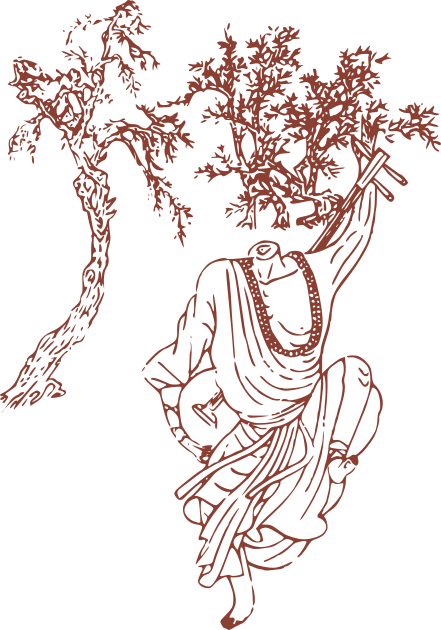
It is said that the crows gathering in temples, having listened to sutras and teachings every day, developed a spiritual nature and could predict fortune and misfortune. Thus, some fortune-tellers who called themselves "Crow Diviners" liked to set up stalls in front of temples, using crows to pick fortune sticks for divination. They always lit sandalwood incense, which symbolizes the temples, at their stalls and claimed that their crows were the spiritually enlightened ones from the temple.
One such Crow Diviner had a crow he had raised from a chick, which could communicate with him using specially made fortune sticks. Every day, he sent the crow to various parts of the city to observe people's lives. When clients came to seek fortunes, he would use the fortune sticks to inquire about information from the crows. He mixed this information with his own understanding of human affairs, weaving prophecies that were half-true, which often managed to deceive.
One day, an official came seeking a fortune, offering a large sum of money. The Crow Diviner told him that his official career would be prosperous and that he would reach a high position. Unexpectedly, the official not only failed to get promoted that year but was demoted instead. Enraged, the official brought his household servants to demand an explanation. The Crow Diviner used the information gathered by the crows to explains that the official had not spent enough money on temple renovation, which magically convinced him. The official, deeply believing in his abilities, even introduced the Crow Diviner to his colleagues.
The Crow Diviner amassed a considerable fortune though this, but he knew too many secrets of the officials and feared for his life. He decided to change his career. One day, he attempted to drive all the crows away, but they refused to leave. The Crow Diviner tried various means to get rid of them, but the crows, unable to endure his mistreats any longer, attacked and pecked him to death.
Afterward, the crows transformed into human forms, donned the attire of fortune-tellers and continued to sell fortunes around the temple, deceiving people as the Crow Diviner had done.
The story starts with a belief about the crows that live around temples. Because the crows listened to sutras and teachings every day, people said they developed a kind of spiritual awareness and could predict good or bad luck. Some fortune-tellers built on that idea. They sat in front of temples, burned sandalwood incense to look like they were connected to the temple, and claimed that their crows were the spiritually enlightened birds from inside the temple.
One particular fortune-teller, called a Crow Diviner, raised a crow from a chick and trained it to answer questions using specially made fortune sticks. He also let the bird fly around the city every day to observe people. When clients came, he combined what the crow indicated with his own knowledge of human behavior and politics to make prophecies that were only partly true. Those half-truths were convincing enough that many people believed him.
A wealthy official became one of his clients and paid a large fee. The diviner told him his career would go well and that a high post was coming. When the official was instead demoted that year, he returned angrily and demanded an explanation. Using information the crow had gathered about the official’s behavior, the diviner told him the demotion had happened because he had not donated enough to temple repairs. The official accepted that explanation, believed the diviner’s power, and even recommended him to colleagues.
The diviner grew rich because of his growing reputation, but he also realized he knew dangerous secrets about powerful people. Afraid for his safety, he decided to abandon the trade. He tried to drive the crows away so he could stop using them, but the birds refused to leave. When he escalated his attempts to get rid of them, the crows turned on him, attacked him and pecked him to death.
After his death the crows did something unexpected: they changed into human form, put on the diviner’s clothing, and continued to sell fortunes at the temple. The story ends with the crows taking over the role of the fraudulent fortune-tellers, using the same methods to deceive people as the Crow Diviner had done. The implication is that the scam continued, now run by the very birds people had believed were spiritually aware.