ENG
'Neath fiery peaks in robes so fine,
Guarding jade doors with gold's radiant shine.
Tangled in those worldly gains,
All splendor fades, like dust, it wanes.
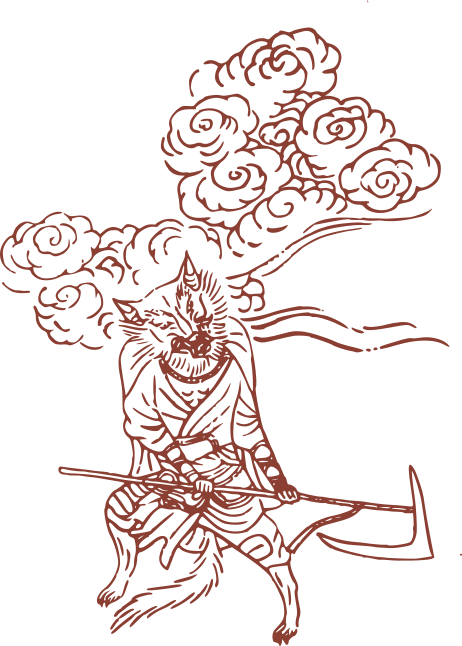
Through the ages, those seeking rain from the Plantain Fan often presented gifts and tributes. As the chief guard in Rakshasi's court, the Bull Sergeant was in charge of collecting these offerings.
The quality of the tributes greatly affected the well-being of the mountains' yaoguais throughout the year. Thus, the Bull Sergeant always schemed to influence the tributes towards his own preferences. One day, leaning on the doorframe and sighing deeply, he noticed the smoke from his nose resembled his favorite roast chicken and devised a plan.
He told all the tribute bearers that the shape of the smoke rising from Flaming Mountains at dusk indicated what the Plantain Fan desired as offerings. Believing this to be a divine sign, the people, despite their hardships, started contributing exactly as the smoke suggested. The Bull Sergeant received many of his desired items and reveled in a contented life. However, over time, this led to growing discontent among the villagers toward Rakshasi and her rains.
One day, Lady Rakshasi had to leave for a lecture by Lord Lao in the Celestial Court and was unable to bring rain for the people. In panic, the Bull Sergeant confessed his wrongdoings and begged for her forgiveness. It turned out she never required any tributes; she naturally provided rain for the villagers through the seasons for planting and growing. The whole tribute scheme was a fabrication.
Lady Rakshasi didn't punish the Bull Sergeant but ordered him to return the goods and tell the truth to the villagers. But they refused to take back their offerings; instead, they urged the Sergeant to convince the Plantain Fan for more rain. Caught between the villagers and the Lady, the Sergeant ended up berated by both sides: the bull scorned by all.
This story takes place at the Flaming Mountains, where a powerful rain-bringing object called the Plantain Fan was the focus of local ritual. People brought gifts and tributes to the fan because they believed those offerings would bring rain for planting. The court of Lady Rakshasi, a powerful figure who could provide rain, sat behind jade doors and gilded splendor; the Bull Sergeant was her chief guard and the official collector of those tributes.
The Bull Sergeant’s job gave him power over what came into the court, and he learned that the quality and type of tributes affected the mountains’ yaoguais and, by extension, the villagers’ fortunes. Because he preferred certain goods, he began scheming to steer offerings toward what he wanted. One evening he noticed the smoke from the mountain looked like his favorite roast chicken, and he seized on that image. He told tribute bearers that the shape of the smoke at dusk was a divine sign showing what the Plantain Fan wanted.
People believed the Sergeant’s story and, despite their hardships, changed their gifts to match the smoke shapes he described. The Sergeant received many of his desired items and enjoyed a comfortable life while the villagers grew increasingly unhappy with Rakshasi when the rains failed to match their expectations. Over time resentment built up against Rakshasi because people thought the tributes or the fan weren’t working.
When Rakshasi had to leave for a lecture by Lord Lao in the Celestial Court and could not bring rain, the Sergeant panicked and confessed his deception. Rakshasi revealed that she had never required those tributes; she provided rain naturally through the seasons for the people’s crops. She chose not to punish him physically but ordered him to return the goods and to tell the villagers the truth about the tribute scheme.
The villagers, however, refused to take back their offerings. They still wanted more rain and pressured the Sergeant to make the Plantain Fan produce it. Caught between a furious populace and an embarrassed superior, the Bull Sergeant was publicly berated by both sides. His scheme left him discredited: he had enriched himself but ended up scorned by everyone.