ENG
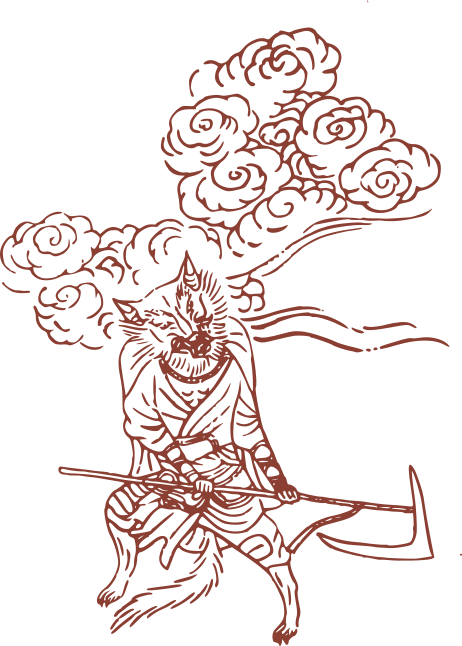
The old bull's halberd-tip gleams,
Karmic flames scorch his shoulders' seams.
Guiding souls through life's end,
Toils endlessly in the mortal land.
In bygone days, a young boy hid in a neighbor's storeroom to play with fire. Accidentally, he ignited the items inside. Fearing punishment, he attempted to extinguish the flames himself, but they quickly grew out of control. The entire storeroom was consumed, and tragically, the boy perished in the blaze.
His death left behind a great calamity. The neighbors demanded compensation for the lost items from his parents, while his parents demanded compensation for their son's life. The arguments raged on, and even on the seventh day after the boy's death, the day that his soul should be fetched, no resolution was reached. With the ritual at the funeral disrupted, and the Bull-Head and Horse-Face, the soul fetchers, refused to escort his soul. Seeing his subordinates' reluctance, the Bull Governor decided to escort the boy himself.
As they approached the boy's home, they heard the sounds of his parents quarreling with the neighbors. Entering the courtyard, they saw the boy's parents accusing, "Our son died in your storeroom. Who knows if he stumbled upon some illicit activity and was silenced?" The neighbors retorted, "Our storeroom held valuable items. Your son must have had thieving intentions, causing the fire. You must compensate us."
Their heated dispute eventually became ended up violence. The Bull Governor asked the boy, "Did you ever foresee this outcome?" The boy, filled with regret, wept bitterly. The Bull Governor, in his compassion, said, "Enough. Such chaos on a soul-fetching day is disrespectful." With that, flames erupted from his shoulder, and he struck an old tree in the courtyard with his halberd, setting it ablaze. The tree was charred black, and only then did the quarreling crowd remember it was the soul-fetching day. In a panic, they all fled the courtyard...
This story centers on an old underworld officer called the Bull Governor, a powerful soul fetcher who guides dead people’s souls to the afterlife. He carries a halberd whose tip shines and has "karmic flames" burning along his shoulders—details that mark him as a supernatural enforcer who works among mortals to keep the rules of death and judgment.
The main human character is a boy who, as a child, hid in a neighbor’s storeroom to play with fire and accidentally set the place alight. He tried to put the fire out but failed, and the storeroom burned; the boy died in the blaze. His death caused a serious conflict: the neighbors wanted payment for the lost goods, and the boy’s parents demanded compensation for their son’s life. That mutual blame turned the household into an unresolved feud.
Normally, on the seventh day after death a ritual is held and the soul is fetched, but the argument kept the funeral ritual from happening. The Bull Governor’s usual subordinates, the soul fetchers called Bull-Head and Horse-Face, refused to go into a scene of such chaos. Seeing their reluctance and knowing the ritual was being disrupted, the Bull Governor decided to go himself to enforce order and collect the boy’s soul.
When the Bull Governor arrived he found the parents and neighbors loudly accusing each other. The parents suggested the boy might have been silenced because of some secret, while the neighbors insisted the boy must have been trying to steal and thus caused the fire. The quarrel even turned violent. The Bull Governor asked the boy if he had seen this coming; the boy, full of regret, wept. The Bull Governor said the disorder was disrespectful to the dead and acted to stop it.
He made karmic flames burst from his shoulder and struck an old courtyard tree with his halberd, setting it black and burning. That dramatic act snapped the crowd out of their fight and made them remember it was the soul-fetching day, so they panicked and fled. The scene ends with the crowd leaving in fear; the text implies the Bull Governor used his power to force respect for the ritual and restore order, but it does not describe any final legal resolution between the families over compensation.