ENG
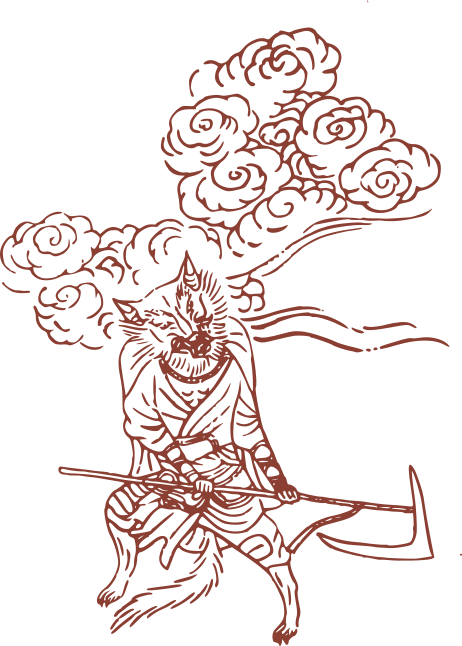
In silken robes that flutter bright,
A long-snouted guai with eyes alight.
Drunk with joy, he sleeps on tombs forlorn,
His spear and armor, gleam like dawn.
Windy, searing sun, a vast waste.
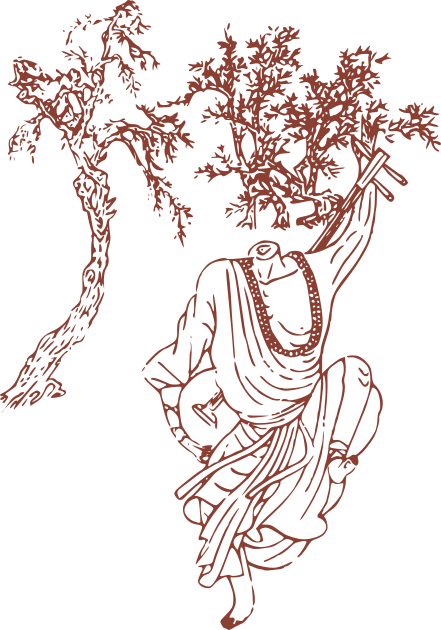
A headless monk and a yellow-robed squire rested together under a withered tree.
The monk plucked at the strings of his Sanxian, his body swaying gently to and fro.
"Enough," said the squire, rousing himself. "Let's have some peace."
The monk's hand stilled. He edged away, then raised his hand to strum again.
The squire hastily held out his drinking flask. "Have a drink?"
"With what mouth? I ain't got a head."
"Where is it?"
"Didn't ye hear the song?" the monk answered himself. "Gone! Someone stole it."
"You should've kept better watch on your head. The fault is your own."
The monk turned away, making no answer.
The squire drew a piece of gold from his robe and showed it to the monk.
Though he had neither head nor eyes, the monk warned: "Mind how ye swing about such a prize. Could have the thieves eyeing ye."
The squire waved a hand. "I don't have to worry. I'll come for you if it's filched."
"Me?"
"You're the only one I've shown it to. If it's gone, you will be the culprit."
The monk gave a dry chuckle, at a loss for words.
The squire gestured toward the horizon. "There's gold aplenty there. Why should you covet a mere sheet from me?"
"I ain't after yer gold. But tell me, what gold lies there?"
"You truly don't know? That was once a kingdom abundant with gold. Gold from the gilded Buddha statues, all stripped bare."
"Even the gold on Buddha statues... Ye ain't a believer in karma then?"
"Ha! All those golden Buddhas never brought them any favor. It is plain there is no such thing as karma."
The monk fell silent.
The squire sneered. Tipping his flask, he found it empty and then rose to his feet. "I'm to await someone at the bidding of my Brother. If you want more drink, come find me."
He tucked the flask on the side. "I'll go scrape off more gold and trade it for a better brew. Then we can drink our fill!"
The monk tried to stop him, so he played the Sanxian, singing a song of karmic justice.
The squire paid him no mind. With a wave and a laugh, he strode away across the sands.
The headless monk's heart weighed down with disquiet. The yellow-robed squire, however, went on his way, and the desert air rang long with the peals of his laughter.
This scene takes place in a hot, windblown desert full of ruined places. A brightly dressed, long-snouted figure in yellow robes — wearing armor and carrying a spear — is easygoing and drunk with laughter, the sort of person who sleeps on tombs and moves through wrecked places looking for pay. Beside him, under a withered tree, sits a headless monk who plays a three-stringed instrument called a Sanxian and sways while he plays.
The two are resting together. The monk cannot drink from the squire’s flask because he literally has no head, and he tells the squire his head was stolen. The squire scolds him for not keeping watch and jokes that it’s the monk’s own fault. When the monk mentions the theft, the squire shows a piece of gold and the monk warns him not to flaunt it because thieves might see it even if he cannot see them.
The squire replies that he does not need to worry, because he will be the one who accuses the monk if the gold disappears: the monk is the only person he showed it to, so the monk would be the obvious culprit. The monk gives a dry laugh but is left with a growing unease at the suggestion. The exchange makes clear the squire trusts little and sees survival and profit as the immediate concern.
They argue briefly about beliefs. The squire says the desert used to be a kingdom full of gold stripped from gilded Buddha statues, and he says clearly that such wealth didn’t bring the people any spiritual favor — there is no karma, he insists. The monk reacts by trying to play and sing a song about karmic justice, but the squire pays him no mind.
In the end, the squire stands up, empties his flask, and says he must go scrape more gold off the ruins so he can trade for better drink. He promises to come back when he’s fetched more coins, then strides off across the sand laughing loudly. The monk is left uneasy and alone, the desert carrying the squire’s laughter. The immediate implication is that the monk is vulnerable — both because he can’t defend or speak normally without a head and because he’s been set up as the likely suspect if someone steals the squire’s gold — while the squire continues to exploit the ruined landscape without apparent moral restraint.