ENG
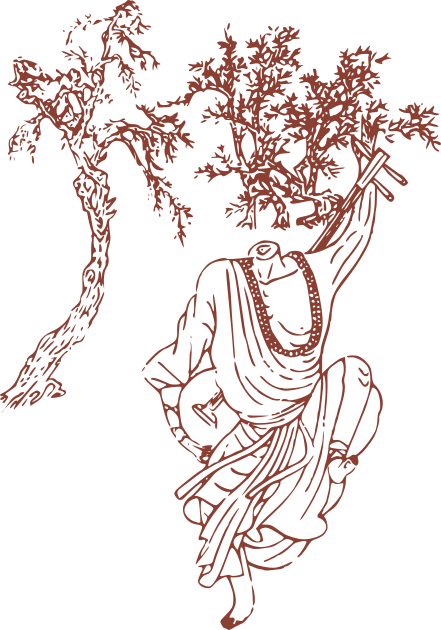
A serpent youth in white, with furious gaze,
Writes poems, dances, yet fierce in battle's blaze.
On a spring day, with a mild wind, in the Marsh of White Mist.
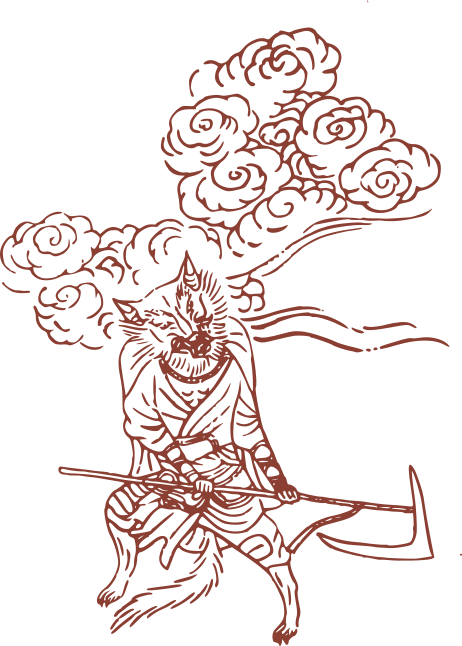
An old wolf brews tea over a stove. Watching the white reflection in the water, he mutters, "You and I should not be here."
The Whiteclad Noble, amid spear practice, hears these words. Swift as thought, he hurls his spear towards the stove, and in another instant, he flashes over, grips the haft, and stands poised before the aged yaoguai.
"Shall we sip blood, or tea?"
"Tea. Sit."
They sit face to face. The old wolf hands the Noble a bowl of tea.
The Noble drains it in one gulp. "A fine tea."
The old wolf nods. "Does a razed mountain garrison warrant so many schemes?"
The Noble replies, "I come at my brother's command. There are no schemes."
The old wolf retorts, "My return from death. Was it not a scheme?"
The Noble says nothing. The old wolf gazes at him, also silent. Despite the cloudiness in the wolf's eyes, his unease is apparent.
The Noble ponders for a moment, then finally answers, "That truly wasn't a scheme."
"If not a scheme, then what was it?"
"Have you heard about that child in the Court? The Buddhas have a spell. They piece together items that mimic the body, chant the mantra of revival, and thus bring back a life."
The old wolf smiles bitterly and shakes his head. "That master, most assuredly, wields no such power."
"Indeed, he does not. Yet the foul relic he obtained bears this potency."
The old wolf says anxiously, "But living like this, I can barely sleep or eat in peace."
"When doom is nigh, life may yet persist. When blessed with life, the loom of death lingers. Breathe and make peace with it, and you may find your tranquility"
The old wolf says nothing. The Noble lowers his eyes, also silent. For all the uncanniness of his eyes, his compassion is apparent.
The old wolf says, "I'll leave this tea to you. Better to drink tea."
The old wolf rises with a sweep of his sleeve, sighing deeply. "Living like this on their blood... how could I bear to do that?"
He totters away, not by the path he came, but turning down a fork in the road beside the marsh.
"Tell the master he doesn't need to come see me anymore."
This scene takes place on a mild spring day in the Marsh of White Mist. The Whiteclad Noble is a young serpentlike warrior who writes poems, dances, and fights fiercely. An old wolf, described as an aged yaoguai, is by a stove brewing tea and staring at his white reflection in the water. He mutters that “you and I should not be here,” setting a tense, out-of-place feeling between them.
The Noble is practicing with his spear nearby when he hears the wolf. He hurls his spear toward the stove and in an instant appears before the wolf, gripping the haft. He asks bluntly whether they should “sip blood, or tea.” The wolf chooses tea, they sit face to face, and the Noble drinks the bowl in one gulp. The exchange is formal but charged.
Their conversation turns to recent trouble. The wolf asks whether the razed mountain garrison justifies all the schemes being run. The Noble says he came because his brother commanded it and that there are no schemes. The wolf brings up his own return from death and asks whether that was a scheme. The Noble, after a pause, insists it really wasn’t a scheme.
The Noble then explains what happened: in the Court there is a child and there is a Buddha spell that can assemble items to mimic a body and chant a revival mantra, effectively bringing someone back. The wolf says the master in the Court cannot possibly have such power. The Noble corrects him: the master himself doesn’t have the power, but the foul relic the master acquired does have the potency to revive. The wolf admits he cannot rest or eat in peace while living this way.
At the end the wolf leaves his tea for the Noble and says he cannot bear living “on their blood.” He walks away down a different fork beside the marsh and tells the Noble to tell the master not to come see him anymore. The scene makes clear that the wolf was resurrected through a corrupt relic tied to the Court’s ritual, that this resurrection has moral and spiritual costs (the wolf feeds on blood and cannot find peace), and that the wolf chooses isolation rather than continued contact with the master or others. The Whiteclad Noble acts under his brother’s command and shows compassion, but the moral tension and consequences of the resurrection remain unresolved.