ENG
Sanxian, sanxian, grief and rage untold,
Defeated and demeaned by my follower bold.
Confused, I saw kindness repaid with hate,
The sands obscure the truth, the wind seals my fate.
In the days when strange winds first howled through Windrest, a curious event unfolded.
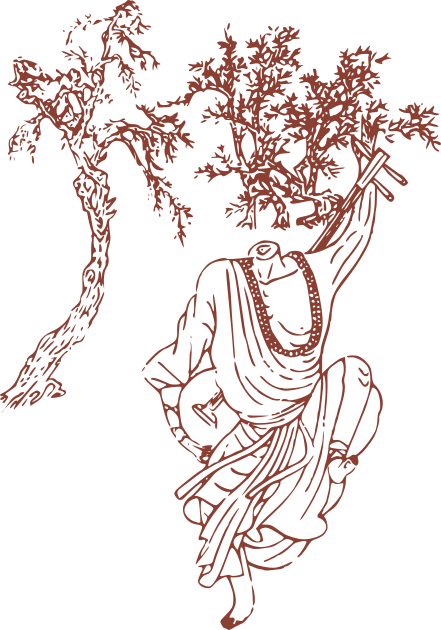
Children of the village were at play near the village's edge, when haunting chords from the Sanxian wafted through the air. Their young ears caught the song's pleasant notes: "In a land o' bloodshed and chaos's sting..." Intrigued and never having heard such a song, the youngsters raced toward the musician. As they neared, they beheld a figure leaning on a boulder-headless.
The children scattered in fright, all but young Chengda, who stumbled and fell. As he lay, weeping and watching his friends flee, the Headless Monk ceased his strumming. He emerged from behind the rock and strummed once more. Invisible forces gently lifted Chengda, steadying him on his feet. No longer fearful, the boy observed that, apart from the missing head, this figure resembled the benevolent monks he'd seen in the hamlet.
Seeing Chengda unafraid, the Headless Monk plucked another chord. A cooling breeze passed over the boy's bruised leg. Looking down, Chengda found his wound miraculously healed. Clapping in joy, he exclaimed, "Magic! Magic!" The monk strummed again, and Chengda's torn trousers restored themselves. With that, the monk returned to his eerie song: "Yellow Wind Ridge, a mighty ole' range, once buzzin' with joy and glee..." and vanished into a gust of wind and sand.
When the villagers returned to save Chengda, they found him pointing at the sand, exclaiming, "It was an immortal!" The adults scoffed, "Nonsense, what sort of immortal lacks a head? You've seen a ghost, boy!"
This scene takes place in the village of Windrest, right after strange winds begin blowing through the area. The sound that draws attention is a sanxian — a three-stringed instrument — playing eerie chords. The song itself opens with lines about grief, rage, betrayal by a follower, and the sands and wind hiding the truth; those lyrics are part of the music the children hear and suggest a larger, troubled story, but they are not explained in the scene.
A group of children follow the music to the edge of the village and see a figure leaning on a boulder. That figure is the Headless Monk: a person who otherwise looks like the benevolent monks of the hamlet but has no head. The children all run away in fear except for one boy, Chengda, who falls and is left behind crying. The Headless Monk stops and then resumes playing; the music calms Chengda instead of scaring him.
When the monk plays again, unseen forces lift Chengda to his feet and the boy’s injuries are healed. His bruised leg is made whole and his torn trousers are restored. Chengda reacts with joy and calls it magic. The monk then resumes singing a line about Yellow Wind Ridge and disappears in a gust of wind and sand, leaving the miracle unexplained.
When the adults arrive, Chengda insists the figure was an immortal. The villagers do not believe him; they mock the idea, asking what kind of immortal would lack a head, and call the encounter a ghost sighting. The adults’ reaction is dismissive and skeptical, so the event is neither accepted as divine nor fully investigated.
The important points are: an uncanny, potentially supernatural musician appears; the Headless Monk behaves kindly and heals a child; the song contains troubling words about grief, betrayal, and hidden truth; and the village treats the incident as superstition rather than evidence of something larger. The scene leaves the monk’s motives and past unresolved and sets up an unsettled mystery about what the song and the headless figure really mean.