ENG
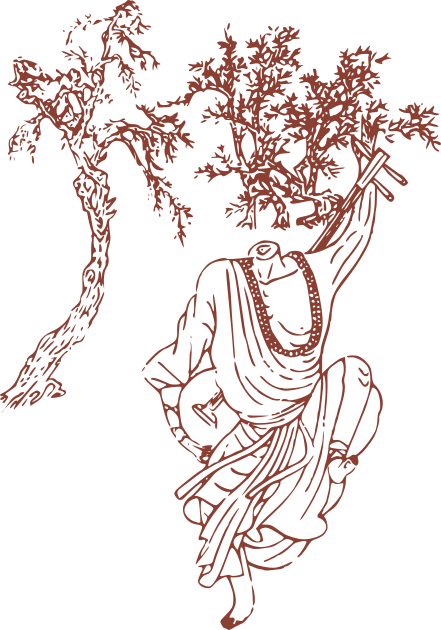
In tattered robes and a bamboo hat worn,
Golden chakram through fire, a sight to adorn.
Three times in snow, his Zen heart tried,
Neither foe nor friend, just mischief implied.
Gray and white, ice and snow blanketed the entire mountain range.
In a deep valley, there was a peculiar cave with a lush green watermelon field, thriving exceptionally well. A young monk was in the field, picking melons, patting them here and there, but none seemed to satisfy him.
Next to the watermelon field stood a strange man wearing a bamboo hat, watching the young monk pick watermelons. "My brother said that if there's a chance, I can test the monkey on his behalf," he said,
The young monk finally picked up a watermelon, weighed it in his hands, and smiled, "This one is good, ripe and sweet. The one you mentioned, I've already checked him for you, he's good."
The strange man replied, "If I don't test him myself, I won't be at ease to tell my brother about him."
The young monk exerted his strength and split the watermelon in half, "Instead of feeling unease about him, I worry more about your brother."
The strange man pondered for a moment and said, "The thing is guarded by my brother. There is nothing to worry about."
The young monk, munching on both halves of the watermelon, said noncommittally, "That thing tests the bearer's heart greatly. He has borne it alone for many years, let's hope he doesn't fail at the last moment."
The strange man quickly responded, "That's why, if this time that monkey succeeds, wouldn't it be the best of both of you?"
The young monk stopped, looked up at the strange man, who quickly bowed his head and apologized.
The young monk laughed again, waved his hand, and said, "Go, go. First, pass my disciple's test, then we'll talk about the rest."
The scene opens in a snowy mountain range but hides a surprising green patch: a cave with a thriving watermelon field. A young monk is there, examining melons carefully but not finding one that satisfies him. The poem at the start paints a picture of a mysterious, worn figure — tattered robes, a bamboo hat, and a golden chakram — someone who has been tested by fire and snow and whose intentions are unclear.
A strange man wearing a bamboo hat watches the young monk. He tells the monk that his brother asked him to test “the monkey” on his behalf. The young monk says he has already checked the person the man means and that this person is good, and he picks out a watermelon that he says is ripe and sweet.
The strange man insists he must test the monkey himself before he can tell his brother he is satisfied. The young monk calmly splits a watermelon and says he is actually more worried about the strange man’s brother than about the monkey. The strange man replies that the thing in question is guarded by his brother and that there is nothing to worry about.
The young monk explains plainly that “that thing” — whatever is being guarded — tests the heart of whoever bears it, and that the current bearer has carried it alone for many years. He hopes the bearer won’t fail at the last moment. The strange man answers that if the monkey succeeds this time, it would be the best outcome for both the bearer and the brother.
After a pause, the strange man bows and apologizes. The young monk laughs, waves him off, and sets a condition: first the strange man must pass the test his disciple offers, and only then will they talk about testing the monkey or the guarded thing. The immediate implication is that the bearer’s burden is serious and decisive, and the young monk insists on procedural order and a personal test before allowing others to intervene.